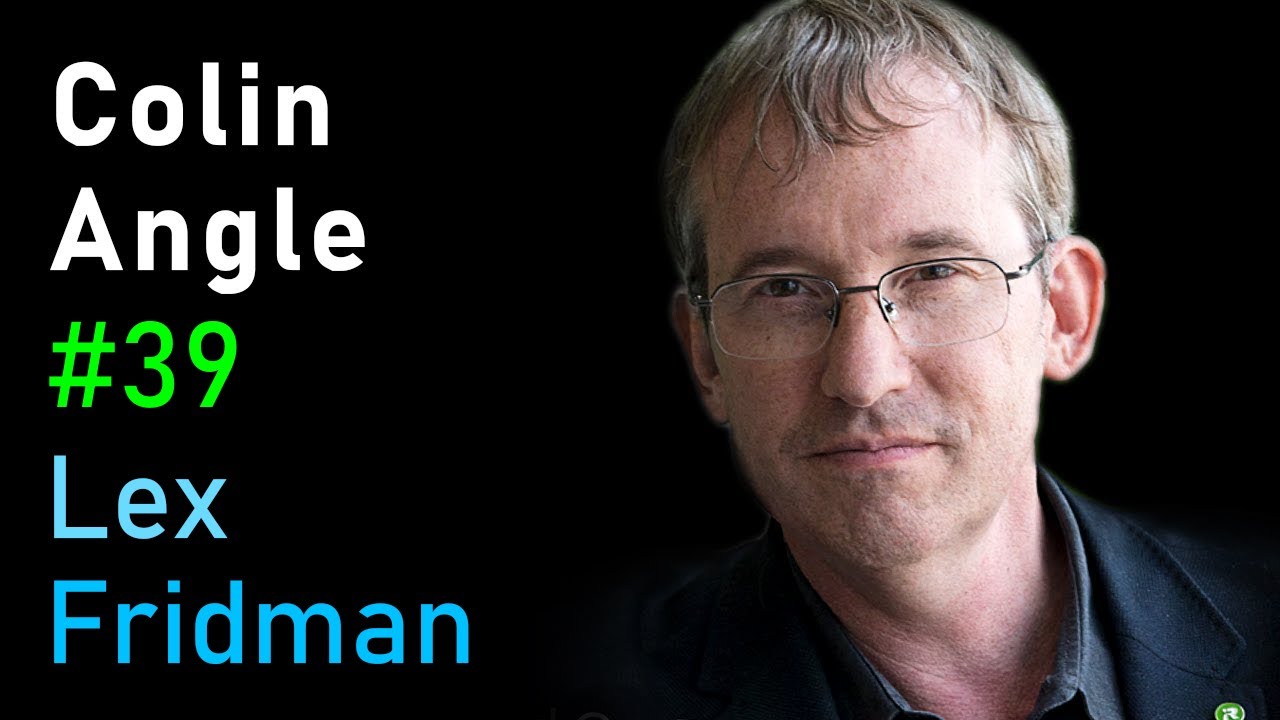
Colin Angle — Co-founder and CEO of iRobot, the robotics company behind the Roomba, Braava, and Terra. Has led the company for 29 years, selling over 25 million consumer robots.
The gist
Lex Fridman talks with iRobot CEO Colin Angle about how the company turned robotics into a profitable consumer business after he became, in his words, a vacuum cleaner salesman. Angle explains how injection-molded plastic and cheap vision-capable cameras drove costs down enough to make capable home robots affordable. He argues the next frontier is making robots less autonomous so they act as partners who understand human commands and the semantic map of a home. The conversation covers privacy commitments, why so many well-funded robotics startups failed, and Angle's belief that smarter robots will become more emotional rather than purely logical.
Big reveals
- iRobot's Roombas are the number one selling vacuums in the US, beating non-robotic vacuums, not just robot vacuums.
- Angle says his current excitement is making robots LESS autonomous so they act as partners that listen to and understand you.
- Angle names Anki, Jibo, Mayfield Robotics (Kuri), Sci-Fi Works, and Rethink Robotics as brilliant robotics companies that all recently went out of business.
- Angle admits technology alone doesn't equal success; iRobot only succeeded once he became a vacuum cleaner salesman.
- iRobot deliberately avoided lasers/lidar for navigation, spending years on vision-based navigation as cheap camera-plus-compute matured.
- Angle admits putting iRobot's privacy commitments on the Roomba box would make him sell fewer units than saying nothing.
- Angle says human-level intelligence in a robot will not happen in his lifetime.
- Angle's theory: as robots get smarter they will get more emotional, because pure logic can't resolve most real situations.
Things worth remembering
- iRobot has sold more than 25 million robots to consumers over 29 years.
- Asimov's Three Laws of Robotics first appeared in his 1942 short story Runaround.
- Angle says the Roomba follows the Three Laws not by AI or intent but because being safe and lasting aligns with being a good product.
- A Roomba would have cost roughly $500,000 several decades ago.
- At scale, the cost of a robot part is basically the weight of the plastic, freeing design from machining-time costs.
- Around two years ago machine-vision-capable processors became cheap enough to put on robots at consumer price points.
- Angle says the home is a harder environment than roads due to near-infinite floor patterns, colors, and textures.
- iRobot is in about 10 percent of US homes.
- Images never leave the robot; visual processing happens locally and only consented semantic knowledge is uploaded.
- Johnson Wax taught Angle to watch how people live to find frequent burdens they don't even realize could be removed.
Recommended in this episode
Books, products and media the guest or host genuinely endorsed here — with the buy link.
Affiliate link — we may earn a commission at no extra cost to you.
Roomba
iRobot
“does the Roomba follow these three laws and also more seriously what role do you hope to see robots take in modern society” — Lex Fridman 00:01:50Find it on Amazon
Braava floor mopping robot
iRobot
“including the Roomba vacuum cleaning robot the Bravo floor mopping robot and soon the Terra lawn-mowing robot” — Lex Fridman 00:00:00Find it on Amazon
Terra lawn-mowing robot
iRobot
“the Bravo floor mopping robot and soon the Terra lawn-mowing robot” — Lex Fridman 00:00:00Find it on Amazon