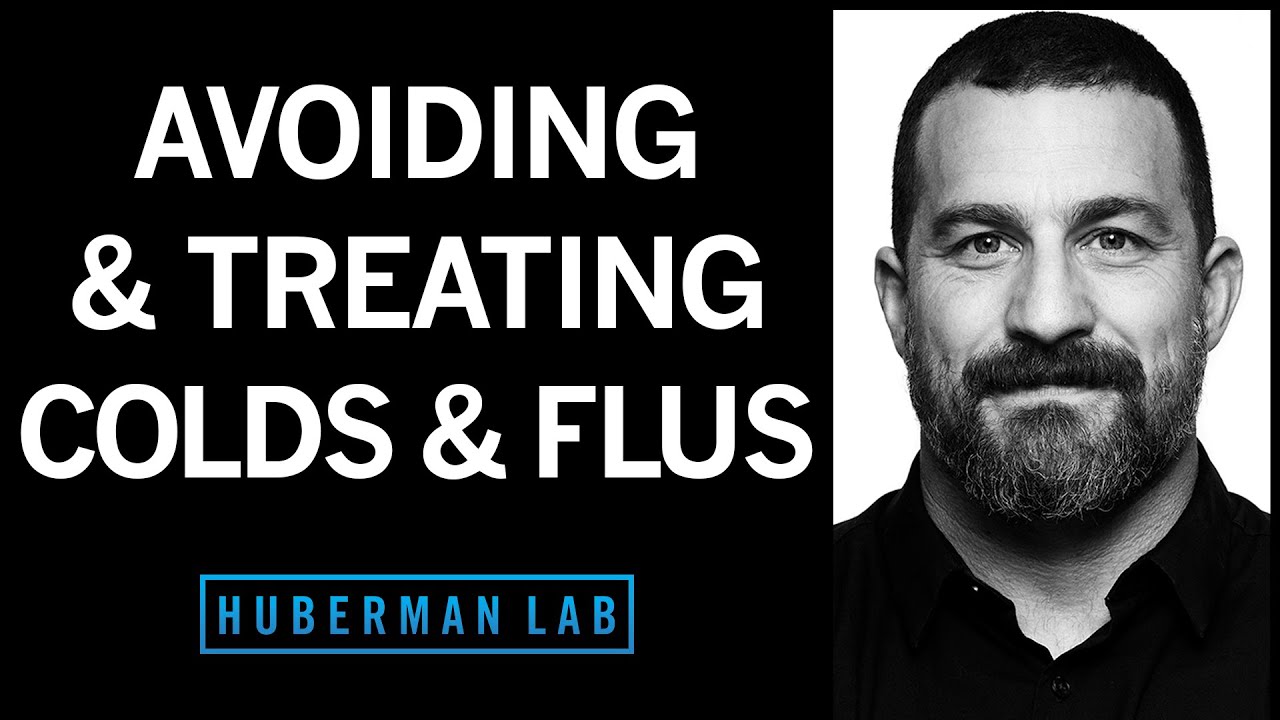
Andrew Huberman — Stanford professor of neurobiology and ophthalmology and host of the Huberman Lab podcast. This is a solo episode with no guest.
The gist
Andrew Huberman delivers a solo deep-dive on the common cold and influenza, explaining why there is no cure (over 160 cold serotypes), how the viruses spread, and how long they survive on surfaces. He walks through the three layers of the immune system—physical barriers, the innate immune system, and the adaptive immune system—in accessible terms. He then covers behavioral protocols to bolster immunity, including sleep, nasal breathing, gut-microbiome support, properly dosed exercise, and sauna. Finally he evaluates popular supplements, debunking vitamin C and echinacea while making a case for zinc and N-acetylcysteine (NAC). Throughout he dispels myths, especially the claim that you stop being contagious once you start feeling better.
Big reveals
- States flatly there is no cure for the common cold because over 160 different cold-virus serotypes keep changing shape.
- Debunks the childhood myth that cold temperatures cause colds—it's viruses, not the weather.
- Warns that feeling better doesn't mean you're no longer contagious; people still sneezing who claim otherwise are 'lying.'
- Says the flu shot only reduces risk of that season's dominant strain by about 40 to 60 percent and he personally usually skips it.
- Reveals his own cold/flu frequency has dropped from yearly to roughly once every 18 to 24 months by tracking sleep and exercise.
- Marathon runners and those training for marathons are 'severely immune compromised' with sharply reduced natural killer cell activity.
- Highlights a 2023 retraction of a nine-trial vitamin C meta-analysis due to double-counted placebo groups.
- Cites a 1997 study where only 25 percent of the NAC group caught flu versus 79 percent of the placebo group.
Things worth remembering
- Cold virus can survive on surfaces for up to 24 hours, while flu virus dies off after about 2 hours.
- Cold virus particles are roughly 5 microns; the thin edge of a credit card is about 200 microns thick.
- You start shedding flu virus and become contagious about 24 hours before your first symptoms appear.
- Studies from Noam Sobel's lab show people touch their eyes or face shortly after shaking hands, a primary infection route.
- The microbiome in your nasal passages is the most effective at neutralizing incoming cold and flu viruses, favoring nasal breathing.
- Two to four daily servings of low-sugar fermented foods (sauerkraut, kimchi, kefir, kombucha) best support the gut microbiome.
- Intense exercise of 60 minutes or less boosts innate immune activity for up to 24 hours afterward.
- A sauna protocol of three rounds of 15 minutes at 176–210°F can raise innate immune cell counts.
- A study found zinc (90 mg/day zinc acetate) produced a three-times-faster recovery from a cold.
- Nobel laureate Linus Pauling famously took many grams of vitamin C daily, yet the evidence for its cold benefit is weak.
Recommended in this episode
Books, products and media the guest or host genuinely endorsed here — with the buy link.
Affiliate link — we may earn a commission at no extra cost to you.
Zinc
“there are pretty darn good data that support supplementing with zinc as a way to combat colds and flu in particular colds” — Andrew Huberman 01:54:12Find it on Amazon
N-Acetylcysteine (NAC)
“one compound that I'm guessing most people perhaps have not heard of but that is very interesting that in fact I've taken before and that I stock in my supplement cabinet” — Andrew Huberman 01:55:12Find it on Amazon