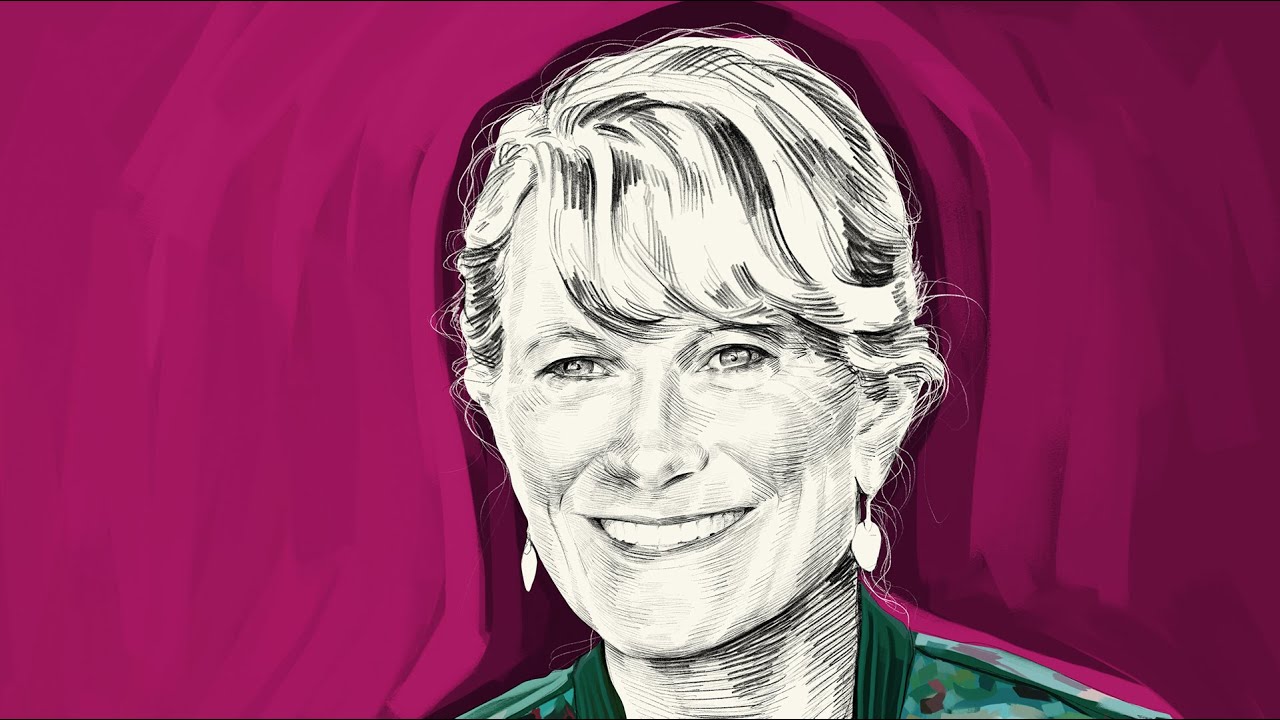
Jacqueline Novogratz — Founder and CEO of Acumen, a pioneer of impact investing that has brought healthcare, education, and clean energy to hundreds of millions of low-income people. She is the bestselling author of The Blue Sweater and Manifesto for a Moral Revolution.
The gist
Jacqueline Novogratz traces her path from a chaotic, entrepreneurial military family of seven siblings to international banking, a near-disastrous attempt to do microfinance in West Africa, and ultimately founding Acumen in 2001. She explains how early lessons in speaking truth, humility, and immersion shaped her conviction that the opposite of poverty is dignity, not just income. She and Tim dig into patient capital, lean data impact measurement, moral imagination, and the danger of dividing people into monsters and angels, drawing on her experience around the Rwandan genocide. The conversation closes with concrete advice for people who have more time than money, individual investors, and institutions who want to make a real impact.
Big reveals
- As a young credit auditor she flagged a Swiss bank as failing despite being told she was too young and naive; the bank later failed, and she was suddenly seen as a whiz kid though nothing about her had changed.
- Her first big professional failure was arriving in West Africa at 25 believing she would save African women, only to learn most people don't want to be saved, especially by an outsider with poor French and little cultural understanding.
- A Nigerian woman warned her the local powers wanted her gone and told her not to eat in front of the women because they might poison her and were talking about voodoo; she then got deathly ill and left after eight days on the bathroom floor.
- She articulates Acumen's founding insight: the opposite of poverty is dignity, having choice, opportunity, and agency, not simply income or jobs.
- She describes sitting in prison with Agnes, a former Acumen co-founder turned major genocide planner, realizing monsters and angels live in every person rather than splitting humanity into good and bad people.
- Acumen's model has three pillars: 10-to-15-year patient capital investments, building a community of social-change builders via Acumen Academy, and measuring impact, later spinning off 60 Decibels and its Lean Data method.
- A malaria bed-net deal in Arusha, Tanzania scaled into 10,000 jobs producing 30 million nets a year (15 percent of global production), giving roughly half a billion people access to bed nets, her proof of concept moment.
Things worth remembering
- Her mother, a 'great myth maker,' refused to buy brand-name Levi's, telling the kids 'why would you need brands, you're Novogratzes,' instilling identity over status.
- In her Chase Manhattan interview she blurted out that her parents were making her apply; the interviewer let her literally leave and re-enter the room to start the interview over, and she got the job.
- She was thrown out of trigonometry and forced into home economics for standing up to a teacher who broke his promise not to give a pop quiz.
- On the plane to West Africa she wept while listening to Joni Mitchell's Blue album on repeat, realizing she was truly on her own.
- In 1986 Rwanda abolished the Napoleonic Code under which women were categorized with children and the mentally impaired and couldn't open a bank account without a husband's signature; a Rwandan woman's request led Jacqueline to help build a women's bank.
- The year she applied to business school, Harvard's annual report pictured graduates with dollar signs on their hats, which pushed her toward Stanford's public management program instead.
- Lean Data revealed off-grid solar didn't improve kids' grades as assumed; pairing solar with a fan kept bugs away and cooled rooms so children slept better and performed better in school.
- In naming tests for Acumen, women loved the word 'immersion' while men hated it, with one man saying it made him feel like he was drowning at sea.
- Across 500-plus episodes of the show, Man's Search for Meaning by Viktor Frankl is the single book that has come up most often, and Jacqueline names it as required reading for this moment.
- Acumen-backed Everytable founder Sam Polk created a university and raised millions in low-interest debt to turn his own employees into Black and Latinx franchise owners of his affordable healthy food chain.
Recommended in this episode
Books, products and media the guest or host genuinely endorsed here — with the buy link.
Affiliate link — we may earn a commission at no extra cost to you.
The Blue Sweater
Jacqueline Novogratz
“of course i recommend people also read your books the blue sweater and also manifesto for moral revolution” — Jacqueline Novogratz 01:28:36Find it on Amazon
Manifesto for a Moral Revolution
Jacqueline Novogratz
“of course i recommend people also read your books the blue sweater and also manifesto for moral revolution” — Jacqueline Novogratz 01:28:36Find it on Amazon
Tribe of Mentors
Tim Ferriss
“you were you were kind enough to contribute to tribe of mentors my last book thank you very much for that” — Tim Ferriss 01:28:05Find it on Amazon
Man's Search for Meaning
Viktor Frankl
“the book i give right now in this time of so much despair is victor frankel's man search for meaning” — Jacqueline Novogratz 01:29:37Find it on Amazon
The Push
Derren Brown (inferred)
“i would encourage everyone out there to look at the work of darren brown ... he has a number of specials including one called the push” — Tim Ferriss 00:53:27Find it on Amazon