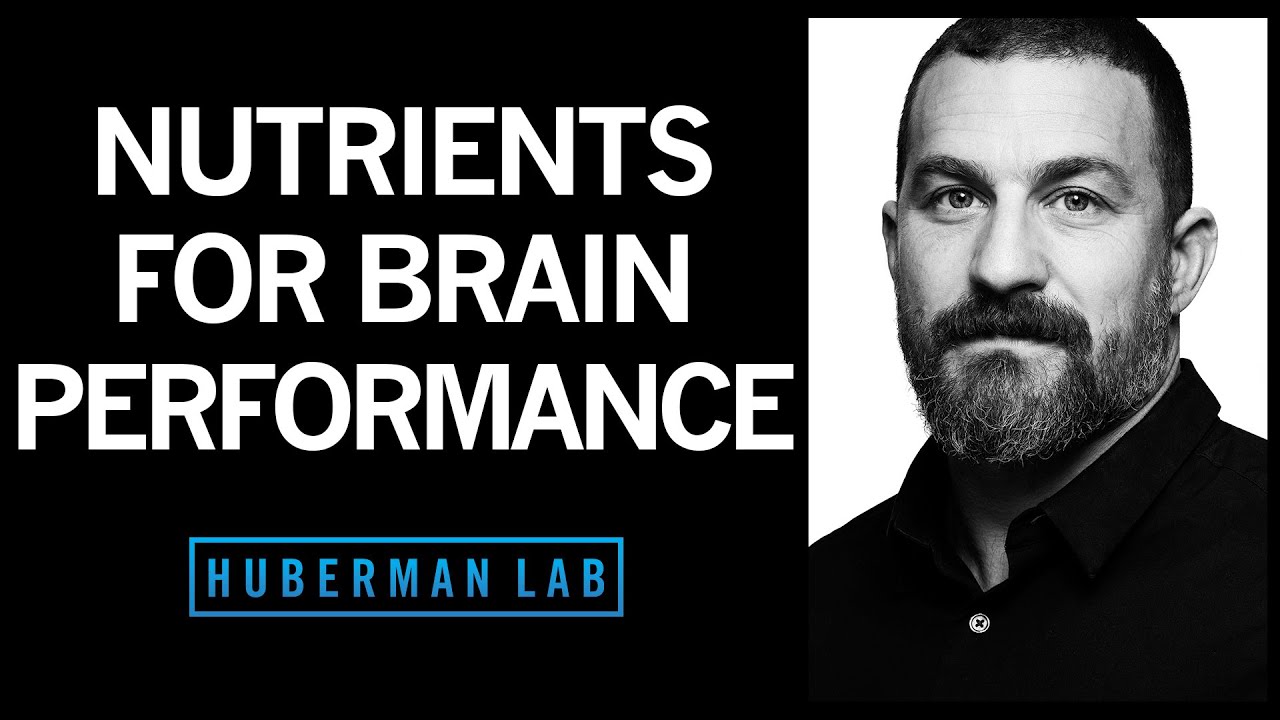
Andrew Huberman — Professor of neurobiology and ophthalmology at Stanford School of Medicine and host of the Huberman Lab Podcast, known for translating neuroscience into science-based tools for everyday life.
The gist
In this solo episode, Andrew Huberman reviews the nutrients and compounds with peer-reviewed support for enhancing brain structure and cognition: omega-3 EPA fatty acids, phosphatidylserine, choline, creatine, anthocyanins from berries, and glutamine. He explains that fat is the most important structural building block of neurons. The second half explores the three signals that drive food preference: taste on the mouth, subconscious gut nutrient-sensing neurons, and learned associations tied to brain metabolism. Huberman shows that what we truly seek is for neurons to be metabolically active, and that food preferences are soft-wired and can be rewired by pairing neutral healthy foods with metabolism-raising foods over one to two weeks.
Big reveals
- Huberman argues fat, not glucose, is the most important food element for the brain because neuron membranes are made of structural fat.
- EPA omega-3 supplementation at 1-3 grams per day can rival antidepressants for mood without similar side effects.
- Using 2-deoxyglucose, researchers showed food reward is eliminated unless neurons can actually metabolize the glucose, even with good taste.
- Drinking diet soda with food can later cause large insulin spikes from the soda alone, making study children pre-diabetic and forcing a halt.
- Alia Crum's milkshake study showed identical shakes produced different insulin and glucose responses based purely on what subjects were told.
- Pairing a neutral healthy food with a metabolism-raising food can make it taste better within 7 to 14 days via dopamine conditioning.
- Huberman reveals you are not seeking taste, dopamine, or even raised blood sugar, but neurons being metabolically active.
Things worth remembering
- Caviar is described as the heavyweight champion of EPA omega-3s per unit volume.
- Egg yolks are the primary dietary source of choline, the precursor to the focus neuromodulator acetylcholine.
- A 2021 review by Roschel details creatine supplementation (5g/day) enhancing brain function, especially in non-meat eaters.
- Creatine may raise DHT and could contribute to hair loss in DHT-sensitive people.
- Blueberry anthocyanins of about 400-600mg daily improved verbal learning and memory in elderly subjects.
- Neuropod cells in the gut, defined by Diego Bohorquez at Duke, sense amino acids, sugars, and fats and signal the brain.
- Hidden sugars are added to processed foods specifically to trigger subconscious gut signals that drive overeating, not because they taste sweet.
- A Cell study found two to four servings of low-sugar fermented foods daily improves the gut microbiome.
- Glutamine can help offset sugar cravings via gut satiation-signaling neurons.
- The insula is the brain's interoception hub, reading internal states from gut pressure to anxiety and taste.