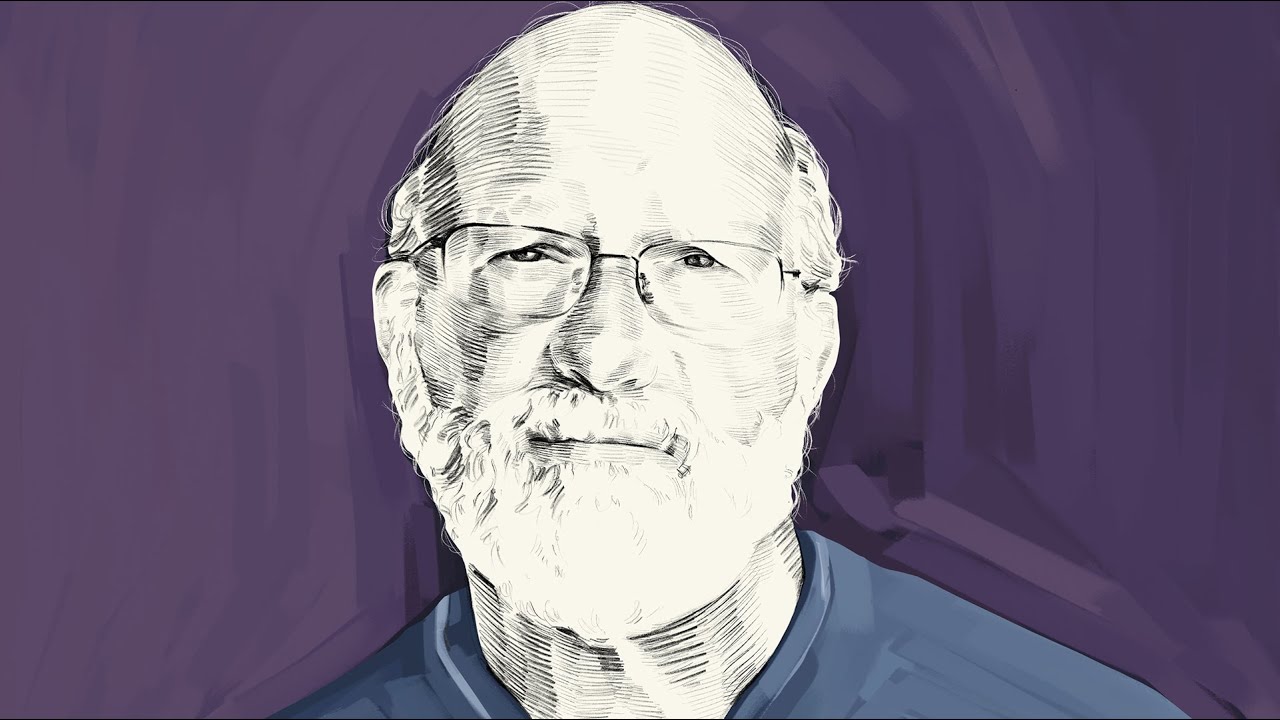
Dennis McKenna — Ethnopharmacologist and ethnobotanist focused on Amazonian plant medicines, with doctoral research on ayahuasca and a key role in the Hoasca Project, the first biomedical study of ayahuasca. He is the younger brother of Terence McKenna and a founder of the McKenna Academy of Natural Philosophy.
The gist
Tim Ferriss interviews Dennis McKenna about his decades-long career studying the ethnopharmacology of Amazonian psychedelic plants. McKenna recounts his pilgrimage to meet Harvard ethnobotanist Richard Evans Schultes, his early mushroom cultivation work, and the science behind ayahuasca's beta-carboline alkaloids, including findings from the Hoasca Project on serotonin transporters. The conversation covers the risks and complexities of plant medicine, including dangerous deliriants like Brugmansia, the destabilizing potential of high-dose use, and his own psychotic-break experience at La Chorrera. He closes by detailing the McKenna Academy's knowledge-preservation and bioprospecting projects in the Peruvian Amazon and an appeal for funding, which Ferriss kicks off with a $50,000 pledge.
Big reveals
- The Hoasca Project found that tetrahydroharmine in ayahuasca causes a long-term elevation in serotonin transporter levels in regular drinkers, a unique and unexpected biochemical finding.
- Deficits in serotonin transporters are associated with alcoholism, addiction, suicidality, and even homicidal behavior, the very pathologies UDV members said ayahuasca cured them of.
- McKenna argues regular ayahuasca use can actually repair serotonin transporter deficits and may be the only drug or medicine capable of doing so.
- McKenna frames his La Chorrera experience as a psychotic break, shamanic initiation, or alien encounter, ultimately calling it a healing experience because it was allowed to fully play out rather than be cut short by psychiatric intervention.
- The McKenna Academy is reviving Terence McKenna's 'Stoned Ape' theory, arguing new findings on neuroplasticity and epigenetics move it from plausible to more than likely.
- McKenna reveals the Academy is running a capital campaign to raise about $600,000 by year's end, with the herbarium digitization project alone projected to cost north of a million dollars.
- Tim Ferriss commits $50,000 of his own money to the McKenna Academy and encourages 12 listeners to match it to fund the entire campaign.
Things worth remembering
- Richard Evans Schultes was a towering figure in ethnobotany, of Einstein-in-physics stature, who spent roughly 15 years doing fieldwork in the Amazon.
- When McKenna made his pilgrimage to meet the swashbuckling, Indiana-Jones-like Schultes, he found the great man hugging an air conditioner in his sweltering Harvard office.
- DMT is not orally active on its own; ayahuasca works because the vine's beta-carbolines act as MAO inhibitors that make the DMT absorbable.
- In Colombia, criminals use scopolamine extracted from Brugmansia to make victims so suggestible they help load their own belongings into vans and have no memory 12 hours later.
- McKenna estimates he has done 500+ ayahuasca sessions, largely because he leads retreats in South America where participants expect him to drink.
- McKenna rejects the 'once you get the message, hang up the phone' adage, arguing there is no standard message and ayahuasca offers a bottomless well of new insights.
- While skeptical of microdosing generally, McKenna thinks ayahuasca microdosing could make sense as a nerve tonic for the beta-carbolines' effects rather than psychedelic effects.
- McKenna estimates 80,000 to 90,000 plant species exist in the Amazon, but only about 10 percent have been even superficially studied and closer to 1 percent thoroughly investigated.
- The herbarium in Iquitos holds about 100,000 specimens, at least half of which are not even mounted.
- The Academy's bioprospecting work raises biopiracy concerns, and McKenna insists indigenous people get a stake and a say as the millennia-long stewards of this plant knowledge.
Recommended in this episode
Books, products and media the guest or host genuinely endorsed here — with the buy link.
Affiliate link — we may earn a commission at no extra cost to you.
Helix Sleep mattresses
Helix Sleep (inferred)
“you've probably heard me talk about helix sleep and their mattresses which i've been using since 2017. i have two of them upstairs” — Tim Ferriss 00:02:38Find it on Amazon
The 4-Hour Body
Tim Ferriss
“like cable chop and lift or rotational exercises things i wrote about in the four hour body” — Tim Ferriss 00:00:30Find it on Amazon
The Brotherhood of the Screaming Abyss
Dennis McKenna
“in your book the brotherhood of the screaming abyss which we'll talk about i've i printed out my amazon kindle highlights i have 189 highlights” — Tim Ferriss 00:07:19Find it on Amazon
The Ethnopharmacologic Search for Psychoactive Drugs
Dennis McKenna (inferred)
“i got my hands on this amazing book called the ethnopharmacologic search for psychoactive drugs but i digress” — Dennis McKenna 00:08:20Find it on Amazon
Psilocybin: Magic Mushroom Grower's Guide
O.T. Oss and O.N. Oeric (Dennis and Terence McKenna) (inferred)
“you're probably familiar with the book psilocybin magic mushroom growers guide which i published under pseudonym one of your great contributions to humankind” — Tim Ferriss 00:16:07Find it on Amazon
True Hallucinations
Terence McKenna
“terence chronicled the events in true hallucinations though his account may seem unlikely and bizarre i believe it is largely accurate” — Dennis McKenna 01:08:49Find it on Amazon