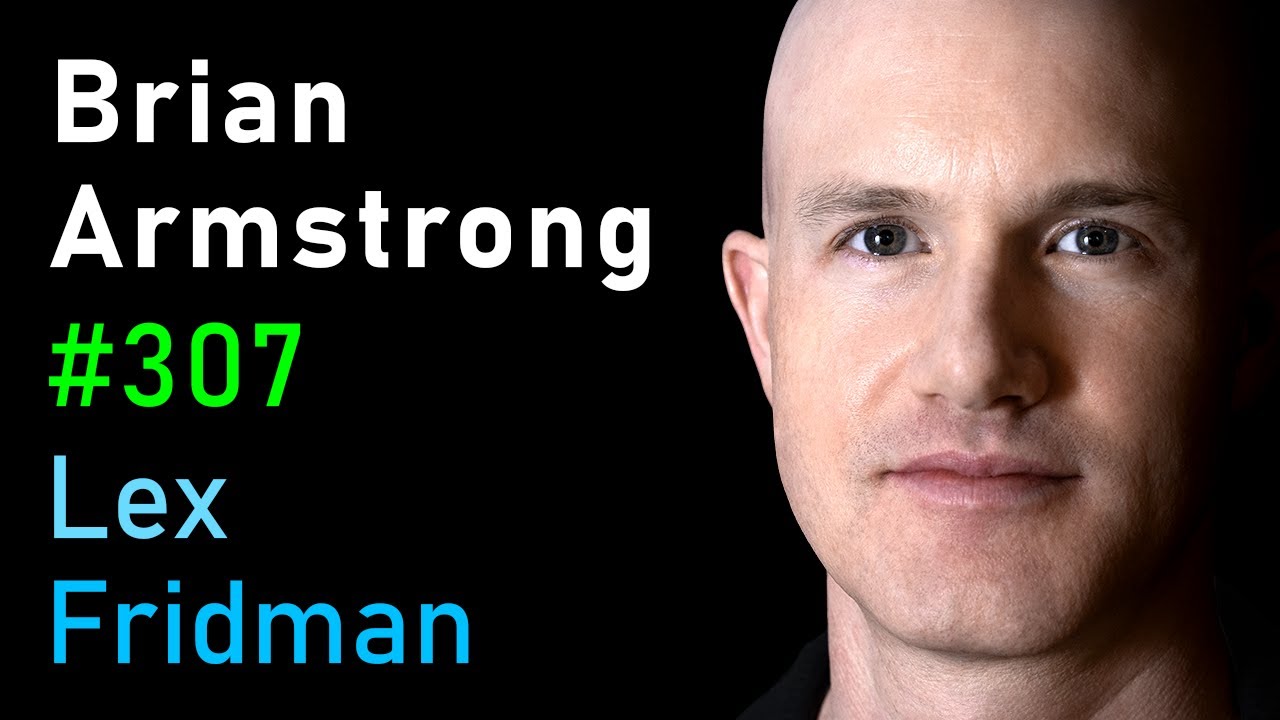
Brian Armstrong — Co-founder and CEO of Coinbase, the largest US cryptocurrency exchange, with about 89 million verified accounts across roughly 100 countries. A former Airbnb engineer who started Coinbase after reading the Bitcoin white paper, he also funds science ventures ResearchHub and New Limit.
The gist
Armstrong traces Coinbase from a Ruby-coded hosted Bitcoin wallet built nights and weekends to a 5,000-person public company, recounting the two-year search for product-market fit that ended when he added a 'buy bitcoin' button. He digs into the engineering of an exchange: order books, slippage, fraud-prevention machine learning, and cybersecurity cat-and-mouse games. Much of the conversation covers crypto's bigger picture: economic freedom, self-custodial wallets, decentralization versus centralized exchanges, privacy coins, and the messy state of US regulation. He explains his controversial 2020 decision to keep Coinbase 'mission-focused' and out of social activism, and closes on leadership, his science bets (ResearchHub, New Limit cell-reprogramming), and advice to be a fixer rather than a critic.
Big reveals
- Recounts a darkest moment: site down, 20,000 backed-up support tickets, his phone number posted on Reddit, curling up on the office floor and crying before getting back to fix the bug.
- The pivot to product-market fit came from phoning five users who'd churned, hearing 'I don't have any bitcoins,' and adding a buy button that sent signups vertical.
- Wrote an entire Bitcoin node in Ruby, which he calls a weird decision in hindsight since they had to rebuild it many times for performance.
- States he genuinely believes Bitcoin could become the world's reserve currency, the gold standard of the crypto economy.
- Made an exit package available after an employee walkout over his mission-focused stance; about 5% of staff took it and diversity numbers stayed the same or improved.
- Says he lost a lot of trust in mainstream media after hit pieces followed his mission-focused blog post.
- Admits he doesn't think there's any real purpose to life; he just wants to 'keep watching the movie' unfold.
- Reveals he wrote 'start a billion dollar tech company' on paper almost daily for a year before having ever started any company.
Things worth remembering
- A favorite fraud signal was 'improbable travel velocity' — an IP in Austin then London an hour later flags a spoofed device.
- Real users type credit card numbers one digit at a time; scammers paste the whole number, so milliseconds between keystrokes is a tell.
- Coinbase pays white-hat hackers via a bug bounty program to find vulnerabilities before black hats do.
- Coinbase's mission is to increase economic freedom, a measurable index correlating with happiness, growth, and less corruption.
- Armstrong lived a year in Buenos Aires and witnessed how hyperinflation breeds a 'don't stick your head up' pessimism.
- Self-custodial wallets can use multi-sig or threshold signatures (e.g. two-of-three keys) so even a court order can't seize funds.
- Coinbase supports Zcash partly because its 'view key' lets transactions be de-anonymized for compliance.
- He estimates roughly one in five Americans have tried crypto, making outright crypto-skepticism hard to defend in DC.
- His company New Limit pursues cell reprogramming via transcription factors to rejuvenate tissues and extend human health span.
- Argues academic journals are a 'shitty scam' — middlemen that paywall taxpayer-funded research while paying scientists nothing.