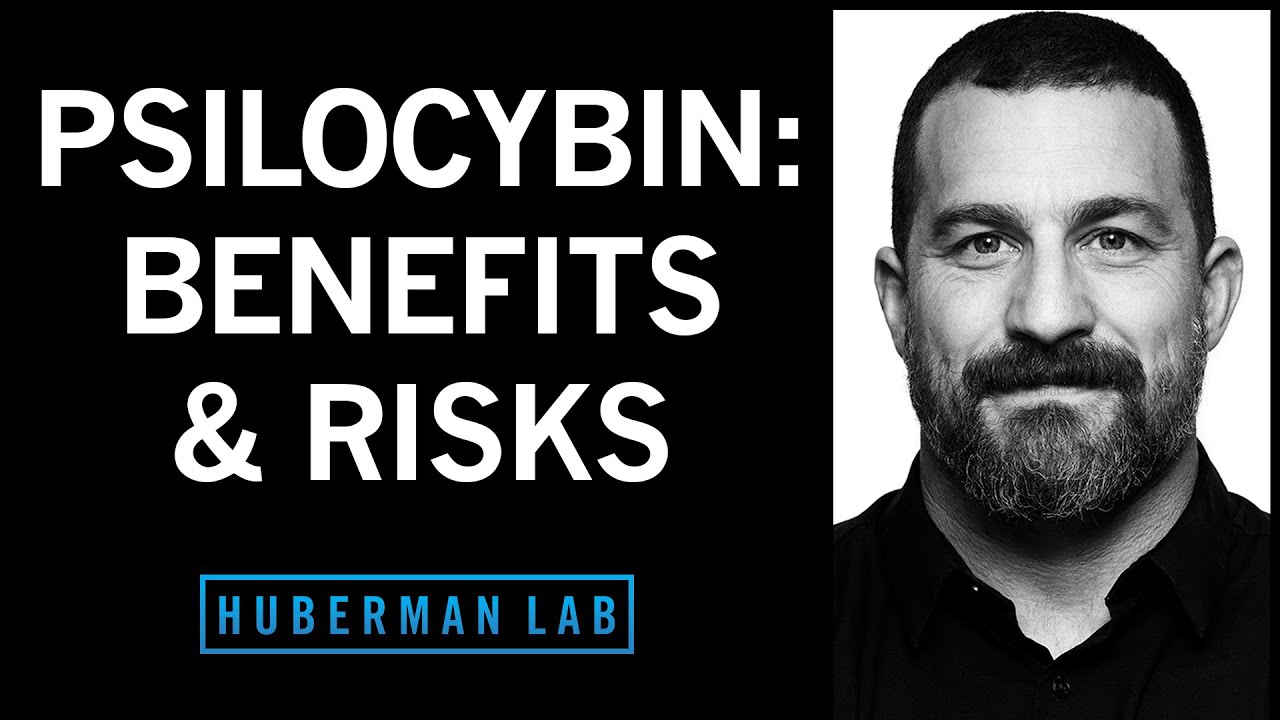
Andrew Huberman — Professor of neurobiology and ophthalmology at Stanford School of Medicine and host of the Huberman Lab podcast. This is a solo episode.
The gist
Andrew Huberman delivers a solo deep dive into psilocybin, explaining that it is converted in the body to psilocin, which closely resembles serotonin and selectively activates the serotonin 2A receptor. He details how this selective activation increases connectivity across the brain, reduces its modular and hierarchical organization, and triggers neuroplasticity via dendritic spine growth. He covers dosing (translating mushrooms to milligrams), the structure of a therapeutic 'journey' including set, setting, eye masks, music, and guides, and the critical role of 'letting go' and oceanic boundlessness in positive outcomes. He summarizes recent clinical trials showing psilocybin outperforming SSRIs and psychotherapy for treatment-resistant depression, while repeatedly stressing legality, contraindications, and safety.
Big reveals
- Reveals that psilocybin essentially is serotonin in its action, selectively and strongly activating the serotonin 2A receptor.
- Explains the active compound is actually psilocin, not psilocybin, and much of the benefit happens after the session.
- States psilocybin clinical trials are outperforming standard therapy and SSRIs for depression in ways staggering to the psychiatric community.
- Argues keeping eyes closed in an eye mask for most of the session is critical for therapeutic benefit, directing attention inward.
- Frames music not as incidental but as one of the major drivers of the cognitive and emotional psilocybin experience.
- Identifies 'oceanic boundlessness,' a mystical sense of connectedness, as the key feature predicting positive therapeutic outcomes.
- Nuances that while letting go matters, extreme anxiety is inversely correlated with depression relief.
- Cites a trial where psilocybin's effect sizes were ~2.5x greater than psychotherapy and over 4x greater than antidepressant drugs.
Things worth remembering
- At time of recording (May 2023), psilocybin remains a Schedule I drug, with Oregon and Oakland as decriminalized exceptions.
- About 90% of the body's serotonin is made in the gut, but brain serotonin is produced independently of gut serotonin.
- The visual cortex has very high serotonin 2A receptor expression, explaining why psilocybin causes visual hallucinations even with eyes closed.
- One gram of magic mushrooms (1000mg) at ~1% psilocybin contains roughly 10mg of psilocybin.
- A so-called 'heroic dose' is about 5 grams of mushrooms, equating to roughly 50mg of psilocybin.
- A typical psilocybin journey lasts 4 to 6 hours, with effects beginning 30 to 45 minutes after ingestion.
- Psilocybin can restore depressed patients' ability to feel joy from music, while reducing the sadness of melancholic music, even afterward.
- Dendritic spines that grow after psilocybin literally look like tiny mushrooms, with a stalk and a head.
- Mouse plasticity studies often used ~1mg/kg psilocybin, roughly double or triple typical human therapeutic doses.
- Psychedelics including psilocybin received FDA breakthrough therapy status around 2018, fueling a surge in clinical trials.