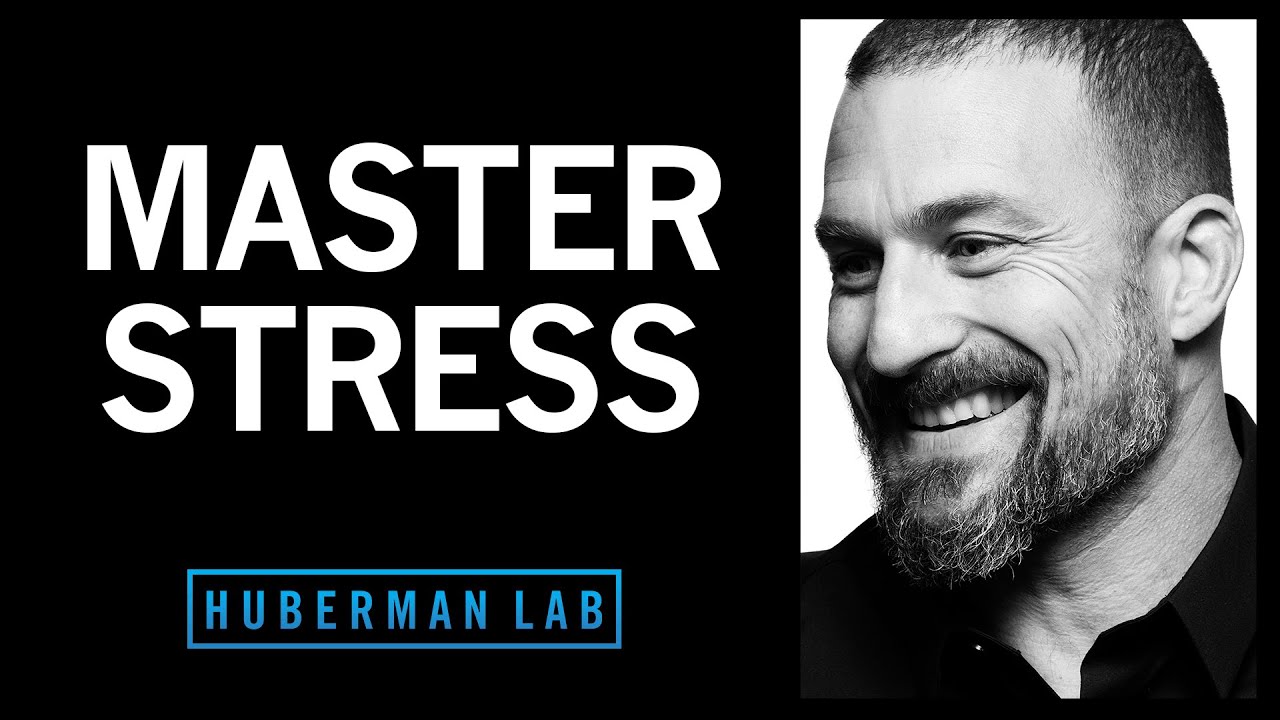
Andrew Huberman — Professor of Neurobiology and Ophthalmology at Stanford School of Medicine and host of the Huberman Lab Podcast, where he translates neuroscience into practical, science-based tools.
The gist
This solo episode argues that stress is not an evil relic but a generic, hardwired system that mobilizes the body and can be controlled in real time. Huberman explains the acute stress response (sympathetic activation, adrenaline, the yes/no two-pronged effect) and the parasympathetic calming system, then teaches tools like the physiological sigh and dilating your gaze. He distinguishes short-, medium-, and long-term stress, noting acute stress boosts immunity while chronic stress causes real harm. He covers social connection, serotonin, the punishment molecule he calls Taqi Kynan, and supplements (theanine, ashwagandha, melatonin caution), then frames emotions as the match or mismatch between internal state and external demands.
Big reveals
- Acute short-term stress is actually GOOD for the immune system, helping combat bacterial and viral infection.
- A PNAS study showed people doing Wim Hof / Tummo-style breathing felt almost no symptoms after being injected with E. coli endotoxin.
- Huberman defends inflammation as a beneficial short-term healing response, not just the villain it's portrayed as.
- Long-term stress is genuinely bad, driving heart disease via chronic hypertension from sustained adrenaline.
- There is no such thing as 'adrenal burnout' under normal conditions; the adrenals hold enough adrenaline for 200 years of stress.
- Social connection rarely releases oxytocin; serotonin and avoiding the molecule he calls Taqi Kynan matter far more.
- Huberman personally does NOT recommend supplementing melatonin, citing reproductive and adrenal-suppression risks.
- He gives 'permission' to not look someone in the eye during hard conversations because closing your eyes helps you focus on the information.
Things worth remembering
- You can voluntarily control the diaphragm via the phrenic nerve even though you can't directly command organs like the pancreas or spleen.
- The sinoatrial node senses blood-flow speed; longer inhales speed the heart up, longer exhales slow it down.
- The physiological sigh (double inhale, long exhale) reinflates collapsed lung sacs and offloads carbon dioxide to calm you fast.
- The pre-Botzinger breathing nucleus was named after a bottle of wine; the parafacial nucleus handles doubled-up breaths.
- During stress the body deploys macrophages and microglia that act like 'little ambulances' rushing to injured tissue.
- Huberman calls stress the most powerful nootropic or 'smart drug' there is for beating procrastination.
- Deliberately dilating your gaze to panoramic vision calms the mind even while the body stays at full physical output.
- Across six studies ashwagandha reduced cortisol by 14.5 to 27.9 percent in healthy but stressed individuals.
- Calming down too fast can trigger the vasovagal response and fainting; heart rate should take 20-30 seconds to settle.
- Huberman keeps a Post-it above his desk reading 'Taqi Kynan' to remind himself to stay socially connected.
Recommended in this episode
Books, products and media the guest or host genuinely endorsed here — with the buy link.
Affiliate link — we may earn a commission at no extra cost to you.
Breath: The New Science of a Lost Art
James Nestor
“there's a plethora of information out there now because of James Nestor's book, "Breath: The New Science of a Lost Art," which came out this last year. Excellent book.” — Andrew Huberman 00:37:40Find it on Amazon
How Emotions Are Made
Lisa Feldman Barrett
“She's written two books that are really wonderful. One is "How Emotions Are Made," which was her first book.” — Andrew Huberman 01:27:22Find it on Amazon
Seven and a Half Lessons About the Brain
Lisa Feldman Barrett
“The second one is "Seven and a Half Facts About the Brain." It's a wonderful book as well. It came out more recently.” — Andrew Huberman 01:27:22Find it on Amazon
L-theanine
“this is one reason why I supplement theanine for sleep. But if I'm feeling like I've been under a lot of stress... I might start taking a little bit of theanine” — Andrew Huberman 01:22:08Find it on Amazon
Ashwagandha
“The other supplement that can be very useful is ashwagandha. Ashwagandha is known to lower anxiety and cortisol.” — Andrew Huberman 01:23:11Find it on Amazon