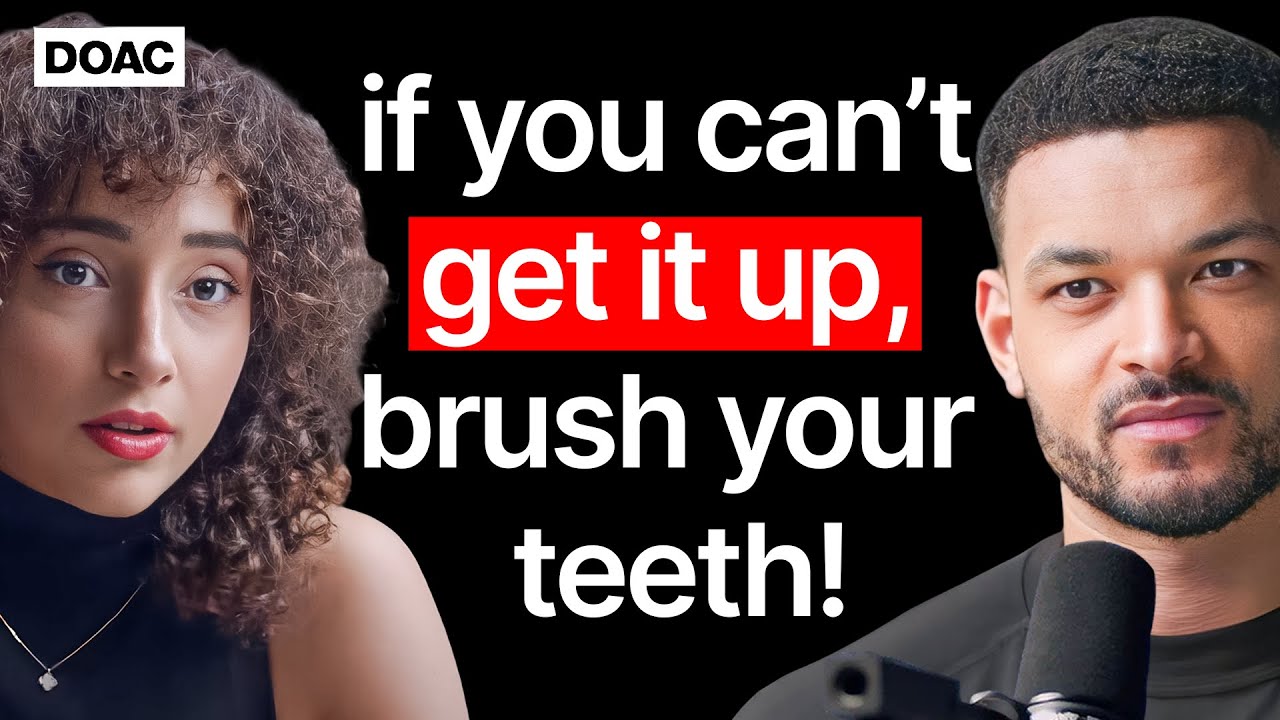
Dr Victoria Sampson — A London dentist and researcher known as 'the saliva queen' who pioneered oral microbiome testing in Europe and runs The Health Society clinic. Her COVID-oral health paper was one of the British Dental Journal's most-cited articles.
The gist
Dr Victoria Sampson makes the case that the mouth is the gateway to whole-body health, arguing the oral microbiome is the second largest in the body and far easier to change than the gut's. She walks through the evidence linking gum disease and oral bacteria to heart disease, high blood pressure, Alzheimer's, rheumatoid arthritis, cancer, infertility and erectile dysfunction. The conversation covers what damages the microbiome (sugar, stress, smoking, mouth breathing, processed diets) and practical fixes (brushing technique, spitting not rinsing, sugar-free gum, green tea, straws). Sampson then reads Steven Bartlett's own saliva test results live, revealing his diversity, risk scores and genetic mutations. She closes on her vision of dentistry and medicine becoming fully integrated.
Big reveals
- Over 90% of subfertile men had an oral disease, and treatment led to a 70% improvement in pregnancy success.
- Men with gum disease are 2.85 times more likely to have erectile dysfunction.
- A patient's severe rheumatoid arthritis improved enough to walk again and come off steroids after Sampson treated her gum disease.
- Most COVID deaths came from bacterial super-infections, with oral bacteria found travelling to patients' lungs causing pneumonia.
- 97% of Alzheimer's sufferers had toxic 'gingipain' enzymes from oral bacteria in their brains, versus zero in non-sufferers.
- Sampson reads Steven's live saliva results: diverse microbiome, medium gum-disease and decay risk, and genetic mutations predisposing him to a sweet tooth.
- A patient with chronic bad breath had 40% of her oral microbiome made of a dog bacterium from kissing her dogs, who themselves had gum disease.
Things worth remembering
- The oral microbiome has roughly 700 different bacteria totalling around two billion bacteria.
- Teeth are the only non-shedding surfaces in the body, so bacteria must be mechanically removed by brushing.
- The breast has its own microbiome, and breast cancer patients showed high levels of the oral bacterium Fusobacterium nucleatum.
- Green tea is highly effective at killing Fusobacterium nucleatum, an oral bacterium linked to aggressive cancers.
- Having sugar all in one 'sugar attack' is better for teeth than sipping it slowly over an hour or two.
- A Wrigley's-sponsored study in Malawi cut preterm births 20% by giving 5,000 women sugar-free gum, a toothbrush and toothpaste.
- You should never brush straight after acidic or sugary food; wait 30 minutes to avoid grinding acid into the enamel.
- You should spit, not rinse, after brushing so the toothpaste keeps working on your teeth.
- In an 11,000-child study, those with sleep-disordered breathing were 50-90% more likely to develop ADHD-like symptoms.
- Drinking acidic, sugary or staining drinks through a straw bypasses the teeth and reduces decay, wear and staining.
Recommended in this episode
Books, products and media the guest or host genuinely endorsed here — with the buy link.
Affiliate link — we may earn a commission at no extra cost to you.
Niton (teeth whitening)
Niton
“we use one in particular um it's called a niton and uh the whitening for one day is the equivalent of having a Coca-Cola” — Dr Victoria Sampson 01:22:26Find it on Amazon
Oral microbiome test (The Health Society)
Dr Victoria Sampson / The Health Society
“on the microbiome test that we've created or Alice one um we look at all the levels of good bacteria and then we'll recommend a probiotic” — Dr Victoria Sampson 01:10:28Find it on Amazon