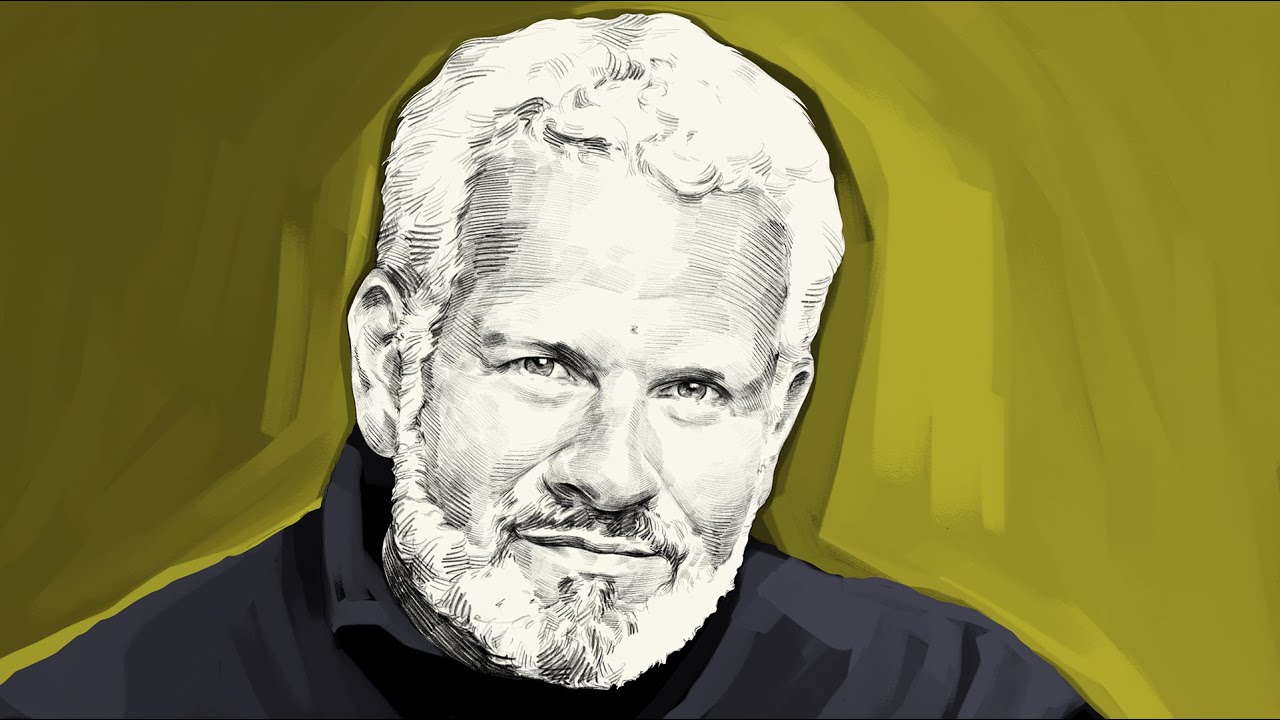
Dr. Adam Gazzaley — David Dolby Distinguished Professor of Neurology, Physiology and Psychiatry at UCSF and founder/executive director of Neuroscape, a translational neuroscience center building brain-optimization tools. He is co-founder of Akili Interactive, maker of the first FDA-cleared video game treatment.
The gist
Tim Ferriss reconnects with longtime friend Adam Gazzaley to trace his journey from the Nature cover story on the NeuroRacer video game to building Neuroscape into a 40-plus-person center. They discuss how an adaptive, closed-loop video game (EndeavorRx) earned the first-ever FDA clearance as a digital treatment for ADHD and why a single intervention can help across conditions like autism, depression, and multiple sclerosis. The conversation then turns to the big announcement: Neuroscape is launching a psychedelic research division led by Robin Carhart-Harris, joining from the UK. Gazzaley frames psychedelics as 'experiential medicine,' arguing the unexplored 'middle' between basic science and clinical trials is set and setting, which he wants to study with multimodal biosensing and multi-sensory environments to build personalized, closed-loop psychedelic experiences. He closes with how listeners can contribute knowledge and philanthropic funding toward a 20 million dollar goal.
Big reveals
- Adam Gazzaley is the David Dolby Distinguished Professor of Neurology, Physiology and Psychiatry at UCSF and founder of Neuroscape, having filed multiple patents including the first video game cleared by the FDA.
- During COVID in summer 2020, the FDA cleared EndeavorRx as a treatment for inattention in 8-to-12-year-olds with ADHD, the first FDA-cleared digital treatment for children and first video game for any clinical condition.
- Neuroscape is launching a new psychedelic research division with Robin Carhart-Harris joining as faculty and founding director, holding the Ralph Metzner Distinguished Professorship.
- Reading Michael Pollan's 'How to Change Your Mind' gave Gazzaley the epiphany that psychedelics are experiential medicines, not classic molecular drugs, paralleling his video game work.
- Gazzaley defines the missing 'middle' of psychedelic science: optimizing, personalizing, and precisely targeting delivery between basic-science insights and large clinical trials.
- He aims to open the 'black box' of the psychedelic session using multimodal biosensing and to build a closed-loop psychedelic experience that adapts the environment in real time.
- Tim Ferriss reveals UCSF can now accept cryptocurrency donations for Neuroscape, which he believes may be a first for a major university.
Things worth remembering
- Certain cognitive abilities begin to decline as early as the early-to-mid 20s.
- The NeuroRacer study improved 60-plus-year-olds' multitasking to levels exceeding untrained 20-year-olds, with EEG-documented neural changes.
- Unpublished follow-up data shows older adults retained NeuroRacer benefits six years later without playing the game again or any booster sessions.
- EndeavorRx has been validated in published studies across autism, depression, ADHD, and multiple sclerosis, all showing improved attention.
- The Duke pivotal trial (led by Scott Kollins) was a multi-site, double-blind, placebo-controlled study of 350 children with ADHD costing millions of dollars.
- EndeavorRx is a Class II medical device cleared through the slower, more rigorous de novo FDA pathway because no predicate treatment existed.
- UCSF has no undergraduate campus or general engineering department; it is purely a medical and health center, consistently ranked among the world's top in neuroscience.
- Robin Carhart-Harris is the most-cited researcher in the psychedelics field and is relocating from the UK to UCSF.
- Tim Ferriss describes doing a five-session series of intravenous ketamine infusions, choosing one DVD to keep constant across all sessions to minimize variables.
- Neuroscape's multimodal biosensing combines high-density EEG, facial expression, electrodermal activity, heart-rate variability, and body movement with machine learning to map a person's experiential state.
Recommended in this episode
Books, products and media the guest or host genuinely endorsed here — with the buy link.
Affiliate link — we may earn a commission at no extra cost to you.
NeuroRacer
Adam Gazzaley / Neuroscape (inferred)
“one of those is neuroracer which is a piece of software that was featured on the cover of nature the title as i remember it was game changer” — Tim Ferriss 00:08:15Find it on Amazon
The Distracted Mind: Ancient Brains in a High-Tech World
Adam Gazzaley and Larry Rosen (inferred)
“co-authored the distracted mind subtitle ancient brains in a high-tech world winner of the 2017 pro's award” — Tim Ferriss 00:06:12Find it on Amazon
EndeavorRx
Akili Interactive (inferred)
“preserves the same underlying architecture the same mechanism that is defined in the patent that was in neuraracer is in this game called endeavor rx” — Adam Gazzaley 00:20:39Find it on Amazon
How to Change Your Mind
Michael Pollan (inferred)
“the first thing was reading michael pollan's book uh how to change your mind i know you're also friends with michael and i did not know him at the time” — Adam Gazzaley 00:45:28Find it on Amazon