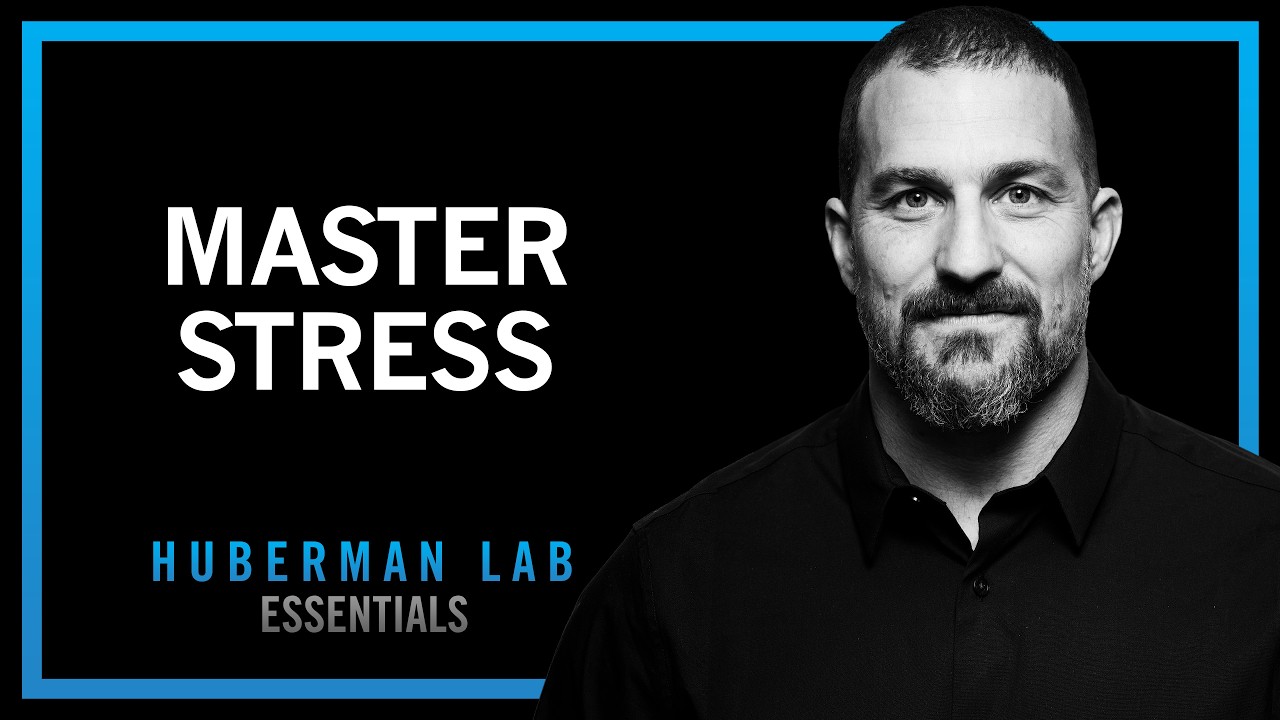
Andrew Huberman — Professor of neurobiology and ophthalmology at Stanford School of Medicine and host of the Huberman Lab podcast. This is a solo Essentials episode with no guest.
The gist
Andrew Huberman reframes stress not as inherently bad but as a generic mobilization system that can be deliberately controlled. He explains the acute stress response (sympathetic chain ganglia, adrenaline, beta receptors) and teaches the physiological sigh as the fastest tool to calm down. He then distinguishes short-term, medium-term, and long-term stress, covering how short-term stress actually boosts immunity (via Wim Hof / Tummo-style breathing and an endotoxin study), how to raise stress threshold by dissociating a calm mind from an activated body, and how social connection plus serotonin mitigate chronic stress. He closes with non-prescription compounds for long-term stress.
Big reveals
- Names the physiological sigh (double inhale, long exhale) as the fastest, most physiology-grounded way to calm down in real time.
- Argues short-term stress is actually good for you because it primes the immune system to fight infection.
- Cites a PNAS study where people doing Wim Hof-style breathing had essentially zero symptoms after E. coli endotoxin injection.
- Reframes medium-term stress management as raising your stress threshold, not eliminating stress.
- Explains dilating your gaze to panoramic vision calms the mind even while the body is at max physical output.
- States social connection, not just exercise or sleep, is the strongest tool against long-term stress.
- Says he personally does not recommend supplementing melatonin due to high typical doses and reproductive-hormone effects.
Things worth remembering
- Inhaling expands the lungs and heart so blood moves slower, signaling the brain to speed the heart up; exhaling does the reverse.
- The alveoli of the lungs spread out would cover roughly the surface area of a tennis court.
- After an exhale-emphasized breath, heart rate takes about 20 to 30 seconds to return to baseline.
- Cyclic hyperventilation breathing should never be done near water due to shallow-water blackout risk, and not by people with glaucoma.
- Getting sick right after a stressful period ends happens because the adrenaline-driven immune boost crashes once you relax.
- A practical line between acute and chronic stress: when you can no longer get good sleep, you've crossed into chronic stress.
- Serotonin acts like a playlist in the brain, biasing which circuits activate, and is released when you see someone you trust.
- Eight studies show L-theanine has a minor effect on anxiety and a notable effect on stress; it increases GABA.
- Huberman only takes ashwagandha during particularly stressful periods, not year-round, because it lowers cortisol.
Recommended in this episode
Books, products and media the guest or host genuinely endorsed here — with the buy link.
Affiliate link — we may earn a commission at no extra cost to you.
Ashwagandha
various supplement brands (inferred)
“I do take it when I'm in these times when things are particularly stressful. So, social connection and some supplementation” — Andrew Huberman 00:30:58Find it on Amazon